

A public cyber charter school for Pennsylvania students in grades 7-12.
Online school. Done right.
What does a day of STEM-infused learning look like for our students?
ACHIEVEMENT HOUSE CYBER CHARTER SCHOOL IS NOW A PROUD MICROSOFT SHOWCASE SCHOOL!
What makes us different?

STEM Education
Prepare for the future with our comprehensive STEM-infused learning experience. At Achievement House, students develop essential 21st-century skills through a STEM curriculum that encourages innovation, problem-solving, and critical thinking. Our hands-on projects and interactive classes ensure that students not only understand theoretical concepts but also apply them in practical ways.

Career Readiness
Set the foundation for a successful career with Achievement House. Our Career Readiness programs offer students the tools and opportunities to become leaders in their chosen fields. Through internships, mentorships, and specialized courses, students gain real-world experience and professional skills that make them stand out in the workforce.
Flexible Schedules
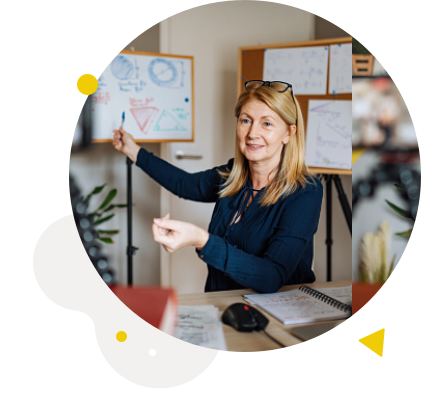
Tailor your learning to fit your life. Our flexible schedules accommodate your unique goals and commitments, whether it’s balancing academics with dance rehearsals, a part-time job, or volunteer work. Our expert educators will help you craft the perfect schedule to achieve your dreams, including opportunities for career readiness programs that align with your interests and future goals.
Real-time, Live Teaching
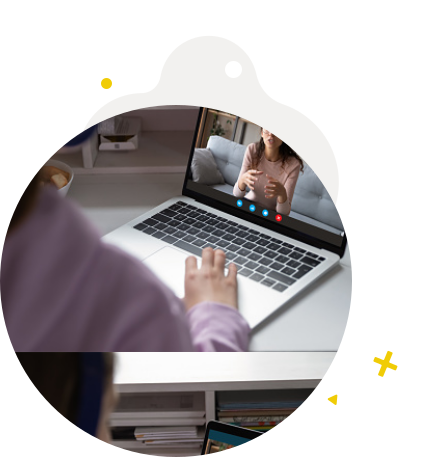
Experience dynamic and interactive classes where student engagement is at the heart of learning. Our daily sessions foster active participation and understanding, with personalized support from teachers and collaborative breakout rooms that create a stimulating environment. Integrate STEM concepts into everyday lessons to ensure students are building essential skills for the modern world.
Enroll Today and Start Your Journey!
Online learning is not new to Achievement House
it’s how we’ve always done it
20
Years
providing a successful, personalized
and rich learning environment
12,000+
Hours
of real-time online
teaching experience
2,304,000
Hours
engaging and supporting students via email, phone, text, chat, online and in real-time
Did you know?
Achievement House uses the same curriculum standards required by the Pennsylvania State Department Education which allows students to easily transition to Achievement House (and back) from Pennsylvania public schools using the same standards.
Discover Achievement House
Achievement House Cyber Charter School offers an engaging STEM-infused online 7-12th grade program that enables you to achieve your full potential and reach your educational goals. We are proud to be a non-profit PA cyber charter school. We are innovative, creative, and eager to use the newest technology available to prepare you for success in a technology-driven world.
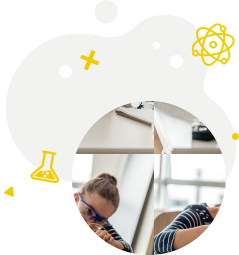
Math and science made exciting
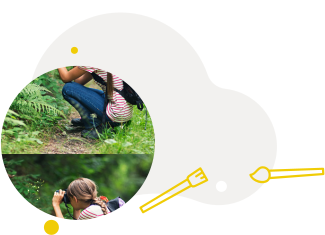
Express yourself with art
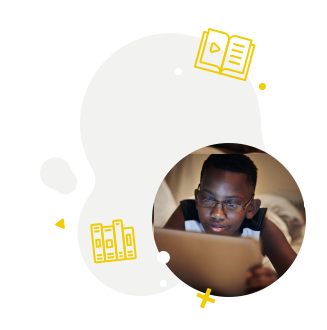
Literature that comes to life
Fun classes to explore something new
Questions our parents often ask
What is the curriculum?
Together as teachers and administrators, we build a dynamic and customized STEM-infused curriculum aligned to PA academic standards. We strive to consistently develop a rich learning environment that will support student success. READ MORE
What’s an average day look like for the students?
You can customize your days to best suit your learning style, grade level, extracurricular pursuits, and other demands on your time. Students log in for attendance, check announcements, attend daily live classes, and complete weekly assignments. READ MORE
What services do you provide for students with an IEP?
Achievement House provides a special education program in accordance with the current federal and state regulations. Our PA certified and highly qualified special education teachers individualize the curriculum to meet the unique needs of each student. READ MORE
How do we enroll our student?
We get to know you right away. Our enrollment specialists work with you to gather the necessary information and documents to complete your enrollment process. We will send you an enrollment packet that includes an Enrollment Form as well as other supporting documents. READ MORE
Still have a question for us?
Did you know?
Online students, by law, can participate in sports, clubs, arts, and any extracurricular activity at their local school district while they are students at Achievement House.
Latest Buzz…
Life Skills Program Empowers Special Education Cyber Students
February 25, 2026 – What if a Life Skills program did more than support students? What if it unlocked independence, confidence, and a future families once feared might be out of reach? At Achievement House Cyber Charter School (AHCCS), our Life Skills track is not a secondary offering of our Special Education program. It is one of the hallmarks of our entire school. Our Life Skills program represents our commitment to raising the standard for what cyber school special education can look like. Across Pennsylvania and beyond, families of students with disabilities often encounter programs that feel repetitive or narrowly focused. Skills might be introduced but not truly developed. Progress might be measured, but not fully nurtured. We chose a different path. At Achievement House, Life Skills programming is dynamic, personalized, and future-driven. It is built on the belief that students with special needs are capable of tremendous growth when given the right structure, the right tools, and the right expectations. It's not about meeting minimum compliance standards. It’s about preparing students for meaningful independence. Since its implementation, our Life Skills program has tripled in size. Parents frequently share that they have witnessed growth they did not know was possible. Many tell us they see confidence replacing hesitation, independence replacing uncertainty, and new potential unfolding before their eyes. If you have ever wondered whether your child could achieve more, learn deeper skills, or build greater independence, you are asking the right question. At Achievement House, we have built a program designed to answer it. A Tailored Path to Independence Every learner is unique – and their programming should be, too. Achievement House delivers a leveled, research-based Life Skills program designed around the needs of each student. Individualized Life Skills Plans: Every student works on a personalized plan aligned to their IEP and post-secondary goals. Flexible Placement Options: Not all students need a full-time Life Skills track. Some thrive with partial integration into learning support or other least restrictive environments. Dedicated Life Skills Teachers: Students are grouped by skill level per subject area, ensuring focused instruction at just the right level. This structure ensures that no student is placed into a predesigned mold. Instead, instruction bends intentionally toward the learner. By combining individualized life skills plans, flexible placement within our cyber school special education model, and skill-aligned teaching teams, Achievement House creates momentum that builds year after year. Students develop functional academics, daily living skills, and self-advocacy abilities at a pace that honors their unique profile. The result is measurable growth, greater confidence, and a clearer pathway toward independence. Assistive Technology Expands Access Access unlocks learning. That’s why we provide all assistive technology for special education required by a student’s IEP, including: Communication devices Touch-screen laptops Large monitors Adaptive mouse and keyboard Tablet Modified workspaces Speech-to-text tools Active noise-cancelling headsets Closed captioning for all live classes Assistive technology removes barriers that once slowed progress. Instead of adapting to limitations, students use tools that amplify their strengths. Technology becomes a bridge, not a barrier. Comprehensive Cyber School Special Education Services About 70% of AHCCS students with IEPs receive at least one related service. Our team delivers services directly aligned to each student’s needs, including: Behavioral Specialist Occupational Therapy Speech and Language Therapy Physical Therapy Vision and Hearing Services Audiologist Reading Specialist Tutor Personal Care Assistant Counseling Social Skills Group Coping Skills Group Social Worker Life Skills Resource Room Learning Support Emotional Support Autistic Support Each service provider communicates regularly with teachers and families, creating alignment between therapeutic goals and classroom instruction. This integrated model ensures strategies used in therapy sessions carry over into daily academic routines, social interactions, and independent tasks. In addition to individualized services, we provide structured academic environments that reinforce learning and skill-building throughout the school week. Every special education student can access support rooms designed to meet their profile of needs. All special education students can access at least one support room: Students may also join extended learning opportunities through Math and Reading Labs, tailored to their instructional levels. These layers of support create a cohesive framework rather than isolated interventions. No student navigates challenges alone. Instead, services, support rooms, and instructional labs work in concert to address academic growth, emotional regulation, behavioral development, and social communication. This wraparound approach ensures progress is comprehensive and sustainable. Progress Monitoring in Our Life Skills Program An IEP should be active, responsive, and dynamic. At Achievement House, progress is monitored weekly. Instruction adjusts when needed. Families meet with educators as often as necessary. This rhythm keeps growth continuous. The Life Skills journey is never static. When a student gains new momentum, we respond. When challenges emerge, we recalibrate. The result is a living educational experience shaped in real time. Flexible Schedules for Real Life AHCCS intentionally structures the school day to support individualized learning and outside therapies: Live classes: 8:30 a.m.-12:15 p.m. Monday-Thursday Free afternoons: Time for community-based services, therapy appointments, or extended learning Optional resource period: Monday-Thursday afternoons for extra academic or organizational support This schedule allows the cyber school special education model to integrate seamlessly with a student’s life. Learning does not compete with therapy or development. It collaborates with them. Active Engagement Through Interactive Learning Engagement fuels retention. Our instructional design uses scaffolding and the “I Do, We Do, You Do” model, gradually releasing responsibility as mastery builds. Students interact with digital platforms such as Classkick, Nearpod, Genially, Newsela, Kahoot, Gimkit, Quizizz, EdPuzzle, and Microsoft tools like Forms, Flip, Sway, OneNote, and Whiteboard. Activities may include the following: Virtual escape rooms Gamified quizzes Virtual reality field trips Drag-and-drop tasks Interactive timelines Collaborative boards Audio and video response projects Peer-assisted learning sessions Teachers remain visible on camera during live instruction, maintaining presence and connection. Even in a cyber setting, classrooms feel active and human. Students do not disappear behind screens. They engage, collaborate, and build confidence. Transition Services for Students with Disabilities Preparation for adulthood is woven into the program through comprehensive transition services for students with disabilities. Students benefit from access to the following: Monthly mailed project kits and manipulatives Mobile and onsite Makerspaces Early Reach partnerships through the Office of Vocational Rehabilitation (OVR) Career speakers and virtual field trips Statewide experiential field trips Internship and service-learning opportunities Ongoing support from a dedicated Transition Coordinator These experiences carry learning beyond academics and into practical independence. Independence grows from repetition, exposure, and guided practice. Our students practice budgeting, communication, career exploration, and self-advocacy with structured support. They leave not only with credits earned, but with readiness built. Life Skills Program Partners with Families In any successful cyber school special education model, family collaboration is foundational. At Achievement House, we view parents and caregivers as active members of the educational team, working alongside teachers, therapists, and support staff to drive meaningful progress. We offer the following opportunities for parents and caregivers: Lunch & Learn sessions Quarterly Life Skills parent workshops Guest speaker events Virtual and onsite field trips Monthly student transition workshops OVR presentations Visits to technical schools, trade programs, colleges, and employment programs These opportunities are designed to keep families informed, empowered, and connected to the tools shaping their child’s future. Parents gain practical knowledge about transition planning, independence skills, career pathways, and community resources. Families gain tools, insight, and confidence. When parents are equipped, students thrive. The support system expands beyond the classroom and into the home and community, creating consistency that strengthens growth and reinforces independence long after the school day ends. Empowering Every Student for Independence Raising the bar means more than academic benchmarks. It means delivering a deeply personalized, future-focused, hands-on, and technology-supported Life Skills program that prepares special education students to navigate adulthood with confidence. At Achievement House, students are not placed on a static path. They are guided toward meaningful independence. They learn to advocate, to problem-solve, to adapt, and to envision a future shaped by possibility. In a world that often asks them to fit in, we provide a program designed to help them stand strong. If you are searching for a cyber school special education program that prioritizes individualized growth, real-world readiness, and authentic partnership with families, Achievement House offers more than schooling. We offer a launchpad toward independence.
QUEST Offers Project-Based Learning That Empowers Cyber Students
February 12, 2026 – At Achievement House Cyber Charter School (AHCCS), learning is designed to do more than deliver content. It is built to shape thinkers, strengthen voices, and help students understand how their ideas connect to the world around them. That philosophy comes to life through the QUEST program, a project-based learning model that encourages curiosity, collaboration, and authentic expression. One of the most meaningful aspects of the QUEST experience is how students explore who they are, what they believe, and how their voices can create impact. This year, students began their QUEST journey by stepping into the world of civic thinking, identity, and collaborative problem-solving, laying the foundation for deeper learning across subjects and grade levels. Encouraging Civic Thinking Through Real-World Learning Throughout Quarter 1, students explored what it means to participate in a community and why civic engagement matters. Instead of memorizing definitions or completing disconnected worksheets, students engaged in hands-on simulations that introduced them to the complexities of how societies function. Through the QUEST program, students examined how ideas evolve into laws and policies. They explored the many steps involved in proposing, debating, and refining legislation, gaining insight into the collaborative nature of decision-making. These interactive experiences helped demystify civic processes while reinforcing that progress often comes from dialogue, compromise, and shared responsibility. As students worked together, they practiced essential skills such as: Sharing ideas respectfully and confidently Listening to multiple perspectives Communicating clearly during discussions Reflecting on outcomes and understanding consequences Evaluating how decisions affect individuals and communities These moments of collaboration transform abstract civic concepts into meaningful, student-centered learning experiences and demonstrate how project-based learning in cyber school can mirror real-life challenges. QUEST Program Explores Foundational Ideas A key component of QUEST is encouraging students to connect big ideas to their own lives. As part of this journey, students explored foundational American documents by creating their own personal “Declarations” and collaborating on a class “Preamble.” This activity invited students to reflect on questions that matter deeply: What do I value? What responsibilities do I have within a community? What kind of future do I want to help build? By writing, revising, and sharing their work, students practiced clear and purposeful communication while learning how foundational principles continue to shape society. Just as importantly, this exercise reinforced that their individual voices matter and that their ideas deserve space and consideration. Through this work, the QUEST program blends academic skills with personal growth, creating opportunities for students to express themselves authentically while developing confidence as writers and thinkers. Identity and Self-Discovery in Project-Based Learning Another powerful thread woven throughout QUEST is self-discovery. Students began a literary exploration centered on the question, “Who am I?” Through reading, discussion, and reflective writing, they examined themes of identity, perspective, and personal growth. This inquiry-based approach helps students see literature as a mirror and a window: a mirror reflecting their own experiences and a window into the lives of others. Students learned how authors use storytelling to share identity, navigate change, and make sense of the world. By connecting literature to their own lives, students engaged more deeply in discussions and developed empathy, self-awareness, and critical thinking skills. These are foundational outcomes of personalized learning at Achievement House, where education adapts to each student’s strengths, interests, and pace. Building Confidence Through QUEST Families often share that QUEST helps students find their voice and engage more meaningfully with learning. The structure of the program provides consistent opportunities to: These experiences help build confidence. Students who once hesitated to speak up begin to trust their ideas. Students who struggled with traditional instruction discover new ways to engage and succeed. QUEST reinforces that learning looks different for every student and that growth comes from exploration, not perfection. Why QUEST Matters for Today’s Learners In a rapidly changing world, students need more than academic knowledge. They need the ability to think critically, communicate effectively, and understand their role within a broader community. The QUEST program prepares students for this reality by blending project-based learning, civic engagement, and personalized instruction in a flexible cyber school environment. At Achievement House, QUEST is not a single project or unit. It is a mindset that encourages questioning, understanding, exploring, solving, and thinking at every stage of learning. By honoring student voice and adapting to individual needs, QUEST empowers learners to grow academically and personally. A Learning Experience That Adapts to Every Student The true strength of the QUEST program lies in its flexibility. Achievement House provides a learning platform that adapts to fit the needs of every student, whether they thrive through discussion, creativity, hands-on exploration, or reflection. QUEST meets students where they are and challenges them to grow into confident, engaged learners. For families looking to enroll at a cyber charter school that values student voice, supports personalized learning, and prepares students for life beyond the classroom, Achievement House offers a powerful path forward. QUEST is more than a program. It is a commitment to helping students discover who they are, what they believe, and how they can make an impact.
Tips for Keeping Gifted Students Motivated in Cyber Learning
February 6, 2026 – Keeping gifted students motivated is one of the most common challenges parents face. Most parents of a gifted child have asked the question at least once, often late at night, often after another homework battle: “How do I keep this kid motivated?” They’re brilliant. Curious. Full of potential. And yet, sometimes, it’s like pulling teeth to get them to care. One week they’re researching black holes for fun; the next, they can’t be bothered to finish a worksheet on long division. You’re not alone and you’re not failing them. Motivation for gifted learners is a puzzle that even experts admit has no single answer. But there are patterns. When parents and schools pay attention to what drives (and drains) gifted students, we can help light that spark again and help it stay lit. Gifted learners are wonderfully complex. They need freedom and guidance, structure and creativity, challenge and reassurance – all at once! Here’s how the Achievement House Cyber Charter School (AHCCS) gifted education program, and you, can nurture that delicate balance. Give Gifted Students Meaningful Work Imagine being asked to build sandcastles every day after you’ve already built skyscrapers in your head. That’s what “busy work” feels like for many gifted kids. The GiftedGuru article “How to Keep Gifted Kids Motivated” calls it respectful work: tasks that actually honor the learner’s intellect. When gifted students get repetitive or low-level work, their brains check out. Not because they’re lazy, but because they’re human. At Achievement House, our teachers work hard to design assignments that stretch students in the right ways. They might invite a middle schooler who’s flying through math to take on a data science project. Or let a passionate writer explore creative nonfiction instead of another formulaic essay. We aim to exchange assignments, not add extra work. Replace the low-level work with rigorous, but highly engaging assignments that enrich the gifted student’s experience. Gifted kids don’t want more work. They want real work, deeper and more impactful work, the kind that feels like it matters. What Actually Motivates Gifted Students? We all mean well when we hand out rewards: “Finish your essay and you can play your game.” “Get straight A’s and we’ll go out for ice cream.” “Do all your worksheets and I’ll give you extra credit.” But too many external rewards can quietly chip away at true motivation. When every effort earns a sticker, a treat, or a grade, learning starts to feel like a transaction instead of a discovery. Over time, even gifted students (the ones who once chased knowledge simply for the thrill of it) begin to ask, “What do I get for this?” That’s when it’s worth pausing to reflect. Rewards and recognition absolutely have their place, but ask yourself: When was the last time your learner really had to stretch to meet a goal? Have the constant gold stars lost their shine? Is the bar still high enough to make success feel earned, or has achievement become too easy to mean much? The shift away from surface-level rewards doesn’t require sweeping changes; it starts small. Try replacing “You’re so smart” with “I love how curious you were about that topic.” Ask what part of the challenge they enjoyed most. Model curiosity by sharing something new you’re learning, too. At Achievement House, teachers focus on celebrating growth and process over perfection. Feedback often sounds like: “You really stretched your thinking here,” or “What made you choose that solution?” Those kinds of conversations do more than praise; they can help retrain how students understand success, turning learning back into something joyful, not always transactional. While we still implement lots of opportunities for praise and utilize a schoolwide positive reward system, we also try to challenge students to reach new personal heights and feel the sense of authentic accomplishment that comes when the bar is set high enough to stretch their minds and skill set. Why Autonomy and Choice Matter for Gifted Learners Autonomy might be the most underestimated ingredient in motivation. Daniel Pink’s “Drive” nails it. People work harder and happier when they feel a sense of choice. Gifted kids especially crave control. They want to make decisions, not just follow directions. That’s why giving options, even small ones, can influence motivation so drastically. Let them choose between a history podcast or an essay. Offer a “menu” of ways to show mastery: a slideshow, a video, a comic strip. AHCCS thrives on this principle. Teachers encourage students to pick learning paths that fit their interests and schedules, not just their grade level. One of our gifted students fascinated by coding and automotives was recently sent supplies to create their own 3D printed car, powered by a Raspberry Pi device and Python coding. Another gifted student is completing an internship program with our technology department to explore their interest in the computer science fields for life after high school. More worksheets? No, thanks. The result of providing real-world learning opportunities and the ability to explore their own ideas and interests? Ownership. And ownership fuels motivation better than most simple rewards ever could. Help Gifted Students Find Purpose in Their Learning GiftedGuru makes a sharp observation: we often tell kids to work hard so they can go to college and get a good job. But for many gifted learners, that kind of future-tense motivation feels hollow. They live in the now, a world moving at the speed of technology, creativity, and innovation. “Someday” just doesn’t cut it. Gifted students crave purpose they can see and feel today. They want to know that what they’re learning connects to something real, something that sparks curiosity or makes an impact. That purpose doesn’t have to be saving the world. It might be curiosity (“How does AI actually learn to mimic human speech?”), creativity (“Can I design an original digital art filter or write a song with AI tools?”), or influence (“Could I use a platform to teach people about something that matters to me?”). At Achievement House, teachers help students tap into these modern “whys.” A student studying computer science might build a simple chatbot to explore how artificial intelligence works. In social studies, a learner might analyze how social media influencers shape public opinion. An artist might turn their digital portfolio into a small online business or design graphics for a community cause. These are projects that don’t just fill grades, they can help establish a purpose. Parents can support this at home by connecting schoolwork to their child’s passions: “How could this skill help you create the app you talked about?” or “How does what you’re learning connect to the streamers or creators you admire?” When learning feels aligned with a student’s real-world interests (like technology, influence, creativity, or change), it stops being a chore and starts feeling like a choice. That’s when motivation truly takes root. Building Resilience Through Academic Challenge We live in a comfort culture. Parents, out of love, often rush to fix every problem. But for gifted students, who may coast through early schooling with ease, struggle can feel like failure. Here’s the twist: a little stress is actually healthy. It teaches grit, perseverance, and creative problem-solving. GiftedGuru calls it “too little stress” when kids are never challenged enough to grow. Because gifted learners often aren’t fully challenged until much later in life, that first real failure can hit hard. Without practice managing frustration or bouncing back, they may lack the resilience to recover. It’s not that they don’t care, it’s that they’re out of practice. At AHCCS, teachers intentionally frame struggle as a natural and valuable part of learning. Students receive timely feedback and opportunities to retry, reflect, and rebuild. When they stumble, they’re guided to ask, “What can I learn from this?” instead of, “What’s wrong with me?” Equally important, Achievement House provides gifted learners with the right balance of acceleration and enrichment, ensuring they face meaningful challenges often enough to build resilience, but with support tailored to their individual strengths. The goal isn’t to make things hard for the sake of it, but to make them hard enough to spark growth. Parents can mirror this at home. When your child hits a wall, resist the instinct to step in immediately. Instead, say, “This looks tough. How could we approach it?” Then stay nearby, offering encouragement and small nudges rather than solutions. That sweet spot of just enough struggle, with just enough support, helps gifted learners develop the perseverance they will need for the bigger academic and life challenges ahead. Perfectionism: A Hidden Motivation Block Gifted kids often carry a secret burden – the belief that being smart means never failing. That’s a heavy load for a child. GiftedGuru points out that perfectionism kills motivation. If success feels impossible, why try? The antidote is permission. Permission to be imperfect, to revise, to learn. At AHCCS, teachers normalize iteration: first drafts, second tries, and honest feedback. A “B” isn’t a setback; it’s a step. It’s a normal part of our school culture to ask students to try, reflect, refine, and improve. We don’t penalize the process of making progress; we celebrate it. At home, carefully consider how you discuss and frame mistakes. Tell stories of your own blunders and what you learned. Create a culture where curiosity matters more than correctness. When gifted kids stop fearing imperfection, they start creating again. That’s where motivation lives, in the messy middle between risk and reward. Understanding Motivation and Control Gifted students don’t always reject expectations because they don’t care…sometimes it’s because they care deeply. Their resistance can be a form of self-definition, a way of saying, “I want a say in my own story.” Maybe your child refuses to finish an assignment or pushes back against a teacher’s directions. Beneath that defiance is often a craving for autonomy or simply a test of trust. As GiftedGuru states, “What looks like a lack of motivation can actually be a strong motivation to prove that the adults around them don’t control them.” Honestly, doesn’t that ring true for nearly every teenager at some point? Seeking independence and identity is part of growing up and this can be especially true for gifted learners who think deeply and feel intensely. The solution isn’t more control; it’s more conversation. Ask what’s driving the resistance. Offer choices within boundaries. Collaborate on setting meaningful goals. At Achievement House, students are treated as partners in learning. They help set goals, choose projects, and share progress in ways that feel relevant to their interests and aspirations. When they see their voice reflected in their education, defiance often transforms into ownership and rebellion can turn into responsibility. Why Feedback Fuels Motivation Imagine finishing something you worked hard on and then hearing nothing for weeks. It’s beyond deflating. Gifted students, especially, crave meaningful, immediate feedback, the kind that says, “I see your effort, and here’s where you can go next.” GiftedGuru warns: “We expect them to wait too long for too little.” A quick “Great job!” isn’t enough. They need dialogue and signs that we value their efforts and unique thoughts. At AHCCS, feedback is woven into the rhythm of learning. Teachers comment in real time, hold check-ins, and personalize responses. Students know where they stand and where they’re growing. Parents can join this loop too. Instead of asking “What grade did you get?” ask “What feedback did you get?” or “What’s your next goal?” That one question shifts the conversation from outcome to growth, which is the foundation of lasting motivation. How to Reignite Motivation in Gifted Learners Gifted kids don’t lose motivation because they’re lazy. They often lose it because the work doesn’t fit them - because it’s too easy, too shallow, too disconnected, or too controlled. All of that can change. We can design environments that respect their minds, trust their choices, honor their individuality, and remind them that learning isn’t about proving you’re smart, it’s about becoming more curious, capable, and resilient. At Achievement House, these ideas guide every decision we make from personalized pacing to flexible projects, from growth-oriented feedback to the belief that every learner deserves to feel both challenged and inspired. Motivation isn’t something we hand to students like a gold star. It’s something we grow alongside them, one meaningful challenge, one real conversation, one “aha” moment at a time.